Codominance and Incomplete Dominance: When Neither Allele Wins
Not every gene follows simple dominant-recessive rules. In codominance, both alleles are expressed equally. In incomplete dominance, the result is a blend. Here's what that means for genetics.
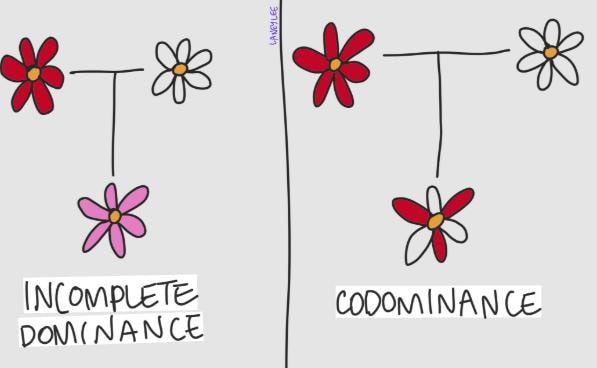
Simple dominant-recessive inheritance is a useful starting point, but many genes do not follow that pattern. Two important exceptions are codominance and incomplete dominance.
Codominance
In codominance, both alleles are fully expressed at the same time. Neither masks the other.
The clearest human example is the ABO blood group system. The ABO gene has three main alleles: I^A, I^B, and i. The I^A and I^B alleles are codominant with each other. A person who inherits one I^A allele and one I^B allele has blood type AB — both the A and B antigens are present on red blood cells simultaneously.
Sickle cell disease provides another example. A person who inherits one normal hemoglobin allele (HbA) and one sickle allele (HbS) produces both normal and sickle hemoglobin. This is sometimes called sickle cell trait. Under most circumstances the person does not have sickle cell disease, but both proteins are present.
Incomplete Dominance
In incomplete dominance, neither allele is fully dominant. The result in a heterozygous individual is an intermediate phenotype — a blend rather than one allele's full effect.
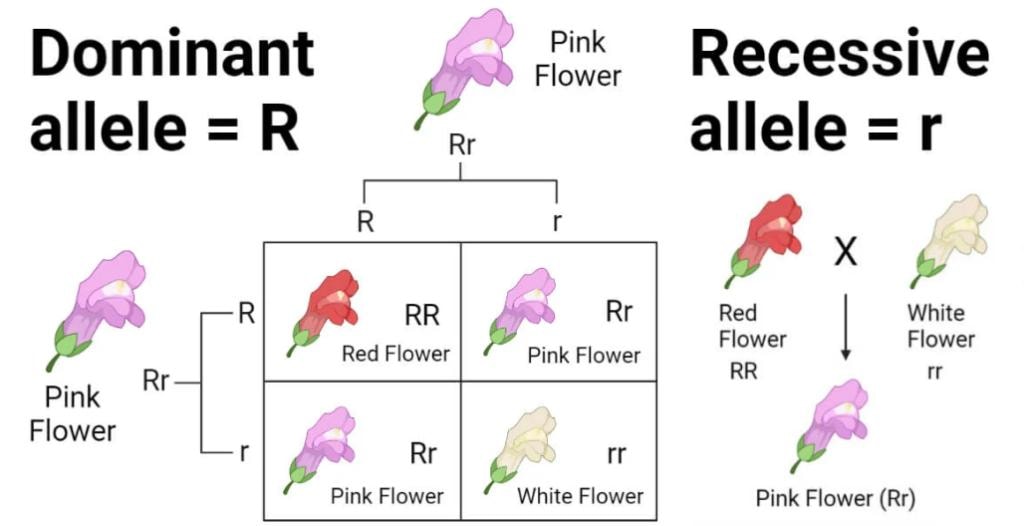
A classic example involves flower color in snapdragons. A red-flowered plant crossed with a white-flowered plant produces pink offspring. The pink color is not a new allele; it reflects the fact that one copy of the gene produces less pigment than two copies.
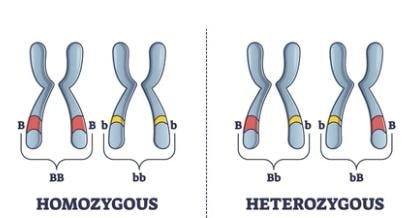
In humans, familial hypercholesterolemia caused by LDLR variants shows a form of incomplete dominance. People with two pathogenic LDLR variants (homozygous) have much more severely elevated LDL cholesterol than people with one pathogenic variant (heterozygous), because the amount of functional LDL receptor protein affects the degree of cholesterol elevation.
Why This Matters
Understanding codominance and incomplete dominance helps explain why:
- Some genetic conditions are more severe in people with two pathogenic variants than in carriers
- Carrier status can sometimes have measurable biological effects
- Genetic test results need to be interpreted in the context of how a specific gene works
At Genetic Insights, we explain not just what your results say but how the underlying biology shapes what those results mean.
Key Takeaway: Codominance means both alleles are expressed simultaneously; incomplete dominance produces an intermediate result. Both patterns explain why simple dominant-recessive rules do not apply to every gene.
Explore Topics
Written by
Dr. Michael P. Vaughn
Content creator and writer sharing insights and stories.