
What Is the Cytochrome P450 System and Why Does It Matter for Medications?
The cytochrome P450 enzymes metabolize a large fraction of all prescription medications. Genetic variants in these enzymes can make standard doses too strong, too weak, or even dangerous.
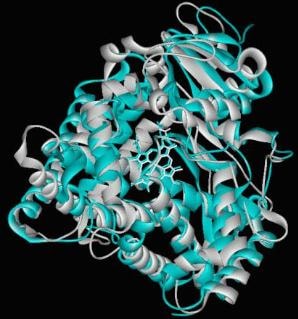
When you take a medication, your body must process it — absorbing it, distributing it, converting it into active or inactive forms, and eventually eliminating it. A family of enzymes called the cytochrome P450 (CYP) system plays a central role in this process, particularly in the liver.
Genetic variants in CYP genes can significantly alter how your body handles many common medications.
What Are Cytochrome P450 Enzymes?
Cytochrome P450 enzymes are a large family of proteins found primarily in the liver and intestinal wall. Their main job is to chemically modify compounds — including drugs, hormones, and environmental chemicals — to make them easier to eliminate from the body.
For medications, CYP enzymes can:
- Convert an inactive prodrug into its active form
- Break down an active drug into inactive metabolites
- Convert a drug into a toxic metabolite
The specific CYP enzyme involved depends on the drug. Different drugs are metabolized by different CYP enzymes.
The Most Clinically Important CYP Genes
Several CYP genes have well-established pharmacogenomic significance:
CYP2D6 metabolizes approximately 25% of all prescription drugs, including many antidepressants, antipsychotics, opioids (codeine, tramadol), and beta-blockers.
CYP2C19 metabolizes clopidogrel (Plavix), proton pump inhibitors, certain antidepressants, and antifungals.
CYP2C9 metabolizes warfarin, NSAIDs, and certain antidiabetic medications.
CYP3A4/3A5 metabolizes the largest fraction of all drugs — roughly 30–50% — including statins, immunosuppressants, calcium channel blockers, and many others.
Metabolizer Phenotypes
Genetic variants in CYP genes affect enzyme activity. Based on their genotype, individuals are classified into metabolizer categories:
Poor metabolizers (PM): Little or no enzyme activity. Drugs that are normally broken down by this enzyme accumulate to higher levels. Standard doses may cause toxicity.
Intermediate metabolizers (IM): Reduced enzyme activity. Effects are between normal and poor metabolizers.
Normal (extensive) metabolizers (NM/EM): Standard enzyme activity. Standard doses work as expected.
Rapid or ultrarapid metabolizers (RM/UM): Increased enzyme activity. Drugs are broken down faster than normal. Standard doses may be ineffective.
A Critical Example: Codeine and CYP2D6
Codeine is a prodrug. It must be converted to morphine by CYP2D6 to produce its pain-relieving effect.
- Poor metabolizers of CYP2D6 convert very little codeine to morphine and may get minimal pain relief.
- Ultrarapid metabolizers convert codeine to morphine very rapidly, potentially producing dangerously high morphine levels — a risk that has caused deaths, particularly in children.
The FDA has issued warnings about codeine use in ultrarapid CYP2D6 metabolizers and in children.
Another Example: Clopidogrel and CYP2C19
Clopidogrel (Plavix) is a prodrug that must be activated by CYP2C19. Poor metabolizers of CYP2C19 may not adequately activate clopidogrel, potentially reducing its effectiveness at preventing blood clots after a heart attack or stent placement.
The FDA label for clopidogrel includes a boxed warning about reduced effectiveness in poor CYP2C19 metabolizers and notes that alternative treatments should be considered.
Pharmacogenomic Testing
Pharmacogenomic (PGx) testing examines variants in CYP genes and other pharmacogenes to predict how an individual is likely to respond to specific medications.
At Genetic Insights, we offer comprehensive PGx testing and interpretation. Understanding your metabolizer status can help your healthcare providers select medications and doses that are more likely to be effective and less likely to cause adverse effects.
Key Takeaway: CYP enzymes metabolize a large fraction of all prescription drugs. Genetic variants can make you a poor, intermediate, normal, or ultrarapid metabolizer — significantly affecting whether standard drug doses will be effective, insufficient, or potentially dangerous.
Sources: PharmGKB; FDA Table of Pharmacogenomic Biomarkers in Drug Labeling
Explore Topics
Written by
Dr. Michael P. Vaughn
Content creator and writer sharing insights and stories.